#
09
/
10
Okayama
Okayama
KAGAWA
Kagawa
A Journey Through the Setouchi International Art Festival
#Setouchi International Art Festival
#Naoshima New Museum of Art
#Inujima Refinery Museum
#Fried Flounder


A tour of
architecture in Japan
November
11.2-4
March
to
December
2025
Journey
through
Japanese
Architecture
CONTENTS
Introduction / Table of Contents
INUJIMASPECIALNAOSHIMA
[Introduction.]
Studio Design Award 2024 Grand Prix Winner (Travel and Work) As part of the 1 million yen prize money received as a supplementary award, this is the ninth installment of "Travel and Work | A Journey Through Japanese Architecture," a 10-month project to verify the idea that "creativity seems to be proportional to distance traveled."
This time, we head to the Setouchi Triennale for the third time in my life.
[Total distance traveled to date]
about
6,182
km
第9弾
Tokyo → Okayama → Inujima → Naoshima
about
694
km
第8弾
Tokyo → Shibukawa → Maebashi → Ōta
about
189
km
第7弾
Tokyo → Matsue → Masuda
about
894
km
第6弾
Tokyo → Sanjo → Niigata → Nagaoka
about
390
km
第5弾
Tokyo → Sapporo → Otaru
about
858
km
第4弾
Tokyo → Yamagata → Sakata/Tsuruoka
about
513
km
第3弾
Tokyo → Osaka
about
552
km
第2弾
Tokyo → Kumamoto → Aso
about
908
km
第1弾
Tokyo → Ishikawa → Toyama
about
515
km
[Travel expenses to date]
746,076
Yen / Yen
100
10,000 Yen
[Itinerary/visit list]

2025.11.2
/ Inujima
art museum
Inujima Art Museum
lunch
Cafe Stand Kururi
stroll
Inujima Art Tour
tavern
Talking about Studio with a side of Studio
SPECIAL
: Enjoying the Island Through Photos
2025.11.3
Naoshima


Inujima

2025.11.2
/ Day 1
Inujima
region
Okayama City, Higashi Ward, Okayama Prefecture
area
0.54 km²
total population
36 people (2020 Census)
※Excerpt from Wikipedia (November 2025)
11:45
art museum
Inujima Art Museum
Inujima Seirensho Art Museum
The weight of history felt in the ruins
A nostalgic museum where greenery and modernity blend
Leaving home at 5:30 AM, I boarded the first Shinkansen from Tokyo Station bound for Okayama.
This trip marks my third visit to the Setouchi International Art Festival. I considered flying, but after weighing the hassle of accessing the islands, I opted for the Shinkansen.
My first destination was Inujima, a place I'd never visited before. I'd long been curious about the Inujima Exile Art Museum, but whenever I toured the standard stops of Naoshima and Teshima, I somehow never made it this far. This trip was finally my chance. Since I had a talk event with Studio as the topic planned for tonight, I needed to be back at Okayama Station by around 5 PM.
After researching, I decided on the route: "Okayama Station → Bus → Hoden Port → Inujima."
Arriving at Okayama Station, I hurriedly searched for a coin locker, shoved my suitcase into one at Sansute Okayama, and jogged to the bus stop.
The bus ride to Hōden Port took about 50 minutes.
I'd thought Inujima might not be too crowded, but boarding the third run of the 60-passenger high-speed ferry, it was packed—no surprise given it was late autumn during the exhibition season.
The high-speed ferry takes about 10 minutes to reach Inujima.
After arriving, I first visited the House Project F residence before heading to my main destination, the Inujima Refinery Art Museum.
The Inujima Refinery Art Museum is a museum that preserves and revitalizes the remains of the copper smelting works still present on Inujima.
It's also fascinating that sustainable initiatives are implemented here, such as Hiroshi Mito's architecture utilizing natural energy sources like solar and geothermal power to minimize environmental impact, and the introduction of an advanced water purification system harnessing the power of plants.
It seems over 2,000 employees worked here at its peak, but operations ceased in 1919 due to factors like the collapse of copper prices, and it was completely shut down in 1925.
The chimneys and bricks, chipped and crumbling in places while retaining traces of their former self, overgrown with grass and vines, create an indescribably nostalgic and cool atmosphere.
Moreover, the view of the Seto Inland Sea from there was incredibly beautiful, evoking a sense of slow-flowing time.


12:40
lunch
Cafe Stand Kururi
CAFE STAND KURURI

Hamo Katsu Burger
For lunch, we headed to this cafe near the Inujima Art Museum.
Their specialty seems to be original burgers and homemade ice cream, and among them, the unusual hamo katsu burger looked recommended, so we decided to try that.
The wooden hut kitchen, apparently built by the owner himself over six months, was incredibly charming, and eating on the outdoor terrace was a very pleasant experience.
1:30 PM
mixed-use complex
Inujima Art Tour
INUJIMA ART
An island with just the right size
After filling your stomach, enjoy a pleasant stroll toward the artworks scattered across Inujima.
Inujima is a small island, just 3.6km in circumference and 0.54k㎡ in area, so you can walk from one end to the other, taking in the art, in just 1-2 hours.The Inujima Smelting Plant opened in 1909. During its peak 10-year operation, the population exceeded 3,000 residents. However, following the plant's closure and the decline of the quarrying industry, the current population is said to be just one-hundredth of that.
The "House Project," which transforms Inujima's houses into art, is led by Artistic Director Yuko Hasegawa and architect Kazuyo Sejima.
Various artists' works are integrated into the houses for display, making even just strolling around fascinating.
Moreover, the weather was perfect—a T-shirt was sufficient, making it an ideal day for a walk.
After circling the entire island, I still had time before the high-speed ferry departure. So I ended up ordering a café au lait at the café attached to the ticket center and spent a little time writing my blog on a terrace bench with a great view of the Seto Inland Sea.
Lately, whenever I have a little free time during my travels, I've been writing this blog lol
The return high-speed ferry departed at 15:35, but apparently this time is the busiest. When I headed to the boarding area, there was a long line...
Since I had received a priority ticket for this time slot upon arriving at Inujima, I managed to get on within the capacity limit. If I hadn't gotten it, I would have definitely been on the second ferry or later.
Please enjoy the photos of Inujima in the "Enjoy Inujima Through Photos" section below.
17:30
tavern
Izakaya Mamotan

This "Studio Talk Sessions" is a side project of our journey exploring Japanese architecture. It's an initiative to meet Studio users in the places we visit and hear all sorts of stories about Studio.
This time, Chanremi connected us, and we got to have drinks with Mr. Tsuzaki from Aqua Plus Design Co., Ltd., one of the Studio Experts in Okayama.
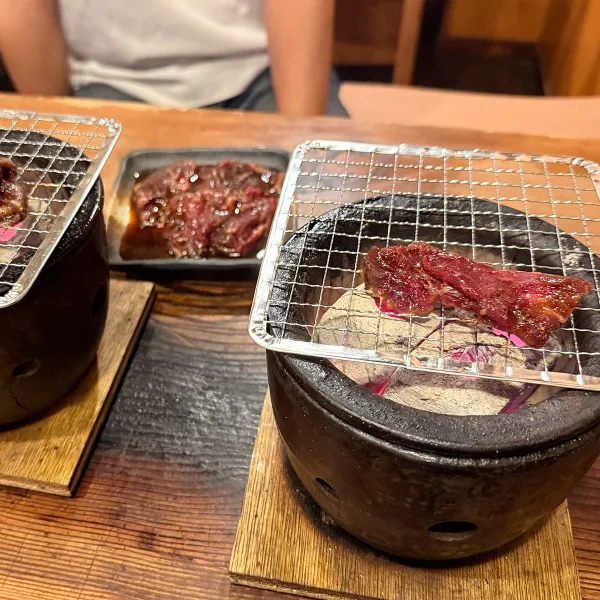
When we returned to Okayama Station by bus, the very gentle and approachable Mr. Tsuzaki was already waiting for us in front of the ticket gates.Even though it was our first meeting, Mr. Tsuzaki was incredibly easy to talk to. As he guided me to a restaurant he occasionally visits, featuring a traditional charcoal grill style, deep conversations naturally began.
The flow continued after our toast, with various topics unfolding endlessly. Among them, the discussion about a new venture using AI was particularly fascinating, so I basically bombarded him with questions lol.
How they started their own business, who they're targeting, and how they're expanding – the clear, easy-to-visualize flow, including future plans, was really interesting.
Also, how every part of their career path connects and contributes to where they are now was incredibly insightful. Learning about the immense effort behind their current success made it a truly educational and enjoyable time.
SPECIAL
Island
: Enjoying the Island Through Photos
SHIROIYA HOTEL


Naoshima
2025.11.3
/ Day 2

Naoshima Town
region
Shikoku region
area
14.21 km²
total population
2,935人
※Excerpt from Wikipedia (November 2025)
10:00
art museum
Lee Ufan Museum
LEE-UFAN ART MUSEUM
: A Museum Collaboration by Lee Ufan and Tadao Ando
After finishing breakfast at the inn at 7 a.m., I boarded the 8 o'clock ferry and headed for Naoshima.
Gazing at the beautiful islands floating in the Seto Inland Sea from the ferry's observation deck, I arrived at Naoshima in just about 20 minutes.
Rental Bicycle I picked up the rental bicycle I had reserved at Ougiya and headed for the Lee Ufan Museum, which I had never visited before.
Having visited several art festivals before, Naoshima might just be my favorite. (Teshima's Teshima Art Museum is also highly recommended, but I've already been there, so I'll skip it this time lol)
The Lee Ufan Museum is an art museum born from the collaboration between internationally acclaimed artist Lee Ufan and architect Tadao Ando. Simple, refined artworks without excess are displayed within the expansive space, creating a highly sophisticated and beautiful environment.
Furthermore, the works displayed outside the museum were also splendid. The arches, positioned as if facing the vast expanse of the Seto Inland Sea, harmonized beautifully with nature, creating a truly pleasant feeling.


10:45
art museum
Naoshima New Art Museum
NAOSHIMA NEW MUSEUM OF ART
99 Wolves: A Stunning Spectacle!
A breathtakingly powerful work of art
Naoshima is the main island I always visit when coming to the Setouchi International Art Festival, but my primary purpose for coming here this time was the Naoshima New Museum, which just opened in spring 2025. Its design is by Tadao Ando, synonymous with Naoshima.
The museum, spanning three levels (two underground and one above ground), focuses on exhibiting and collecting representative works and commissioned pieces by artists from Asia, including Japan. Among them, the most spectacular was Cai Guo-Qiang's work "Head On."
The sight of 99 wolves running and soaring through the vast space was truly breathtaking!
Seeing this alone made the trip worthwhile.
The museum itself is beautiful, with light streaming through triangular windows in its soaring atrium ceiling and striking diagonal concrete lines.
I didn't use the attached cafe, but its location overlooking the great outdoors looked absolutely perfect for relaxing.


11:45
art museum
Chichu Art Museum
CHICHU ART MUSEUM
A museum where the concrete lines are painfully sharp and beautiful
When it comes to famous museums on Naoshima, this is the one: the Chichu Art Museum, established in 2004 as "a place to contemplate the relationship between nature and humanity." Of course, it was designed by Tadao Ando.
Like the Lee Ufan Museum, it's a shame photography isn't allowed inside, but it's an incredibly cool museum.
The concrete lines are sharpened to an almost excessive simplicity, creating an absolutely stunning beauty, and every work on display is equally simple and uncompromising.
The painfully refined and sophisticated museum is incredibly cool, and the light filtering through the calculated gaps in the building was also beautiful.
There are various works, but James Turrell's piece "Open Sky," where you see the sky through a rectangular hole in the ceiling, is incredibly simple yet truly beautiful. It's the real sky, yet it's so beautiful it creates the illusion of being projected onto a screen. The fact that photography isn't allowed might also help you immerse yourself in the work.
1:20 PM
lunch
calm
YUNAGI

Inside is fluffy
After visiting the Chichu Art Museum, I debated where to have lunch. While the museum's attached Chichu Cafe was tempting, I opted for this spot instead, drawn by its authentic Naoshima charm and the chance to try their fried flounder.
Located right near Miyaura Port on Naoshima, this restaurant specializes in flounder.
Their fried flounder is particularly famous, so I ordered it without hesitation.
The kitchen echoed with the crisp, savory sound of flounder frying.The fried flounder arrived shortly after ordering. The outside was crispy and fragrant, while the inside was fluffy. It wasn't seasoned, so you add salt to your own taste, but the natural flavor of the fish came through beautifully and it was incredibly delicious.
14:00
art museum
Benesse House
Museum
BENESSE HOUSE MUSEUM
A museum integrated with the hotel where nature, architecture, and art coexist
After lunch, we headed to the final museum of the day: the Benesse House Museum. Opened in 1992, it's a facility where the museum and hotel are integrated, based on the concept of "the symbiosis of nature, architecture, and art." Of course, it was designed by Tadao Ando.
As a museum where you can actually stay overnight, I had initially hoped to book a stay here. However, even over a month in advance, reservations were already fully booked, so that dream didn't come true.
Benesse House Museum is even more like a proper art museum than Chichu Art Museum.
You can see various works like paintings, sculptures, photography, and installations. Apparently, the artists themselves choose the locations and create their works there.


15:00
cafe
CAFE
cafe latte tour
After visiting four museums in a row, I was feeling pretty full, so I took a little break for some cafe latte time.
Since it was a Monday holiday, many shops were closed, and cafes with good views were packed. I ended up taking a break at a cafe I happened to find right behind the House Project. The customers in front of me and behind me were both foreigners. This was my third time at the Setouchi Triennale, but I was surprised at how much the number of foreign tourists has increased.


3:15 PM
art museum
House Project Tour
HOUSE PROJECT
Enjoying the scattered artworks
Just like an art festival
After taking a break with a café latte, I enjoyed strolling around and taking in the art of the House Project scattered around this area. Naoshima itself is quite large, but I was happy that the House Project was clustered together in one area, making it easy to see.
I had already seen them before, but it was interesting to see my favorite artists' works again: Shinro Ohtake's "Haiya" and Hiroshi Senju's "The Faure".
There is a place called "I♥︎Yu" designed by Shinro Ohtake, an art facility where you can actually take a bath. You can only enter this facility if you take a bath. It's also interesting, so if you have a chance to visit Naoshima, I highly recommend this public bath.
After touring the island, I returned the rental bike that had served me well for the day and boarded the ferry to Uno Port in Okayama, bringing this journey to an end. The Seto Inland Sea, bathed in the evening glow on the way back, was truly beautiful.
Goodbye, Naoshima.
Well, with this, only one more trip remains on this journey.
Hiroshi Senju
Ishibashi "The Faure / Garden in the Sky"


Tatsuo Miyajima
Kadoya "Sea of Time '98"

Hiroshi Sanbuichi
The Naoshima Plan "Water"


Shinro Ohtake
Dentist "Tongue-on-Dream / Peek-a-Boo"

Hiroshi Sugimoto
Gōō Shrine "Appropriate Proportion"

A Journey Through Japanese Architecture
March
to
December
2025
Journey
through
Japanese
Architecture

Corporate Site
