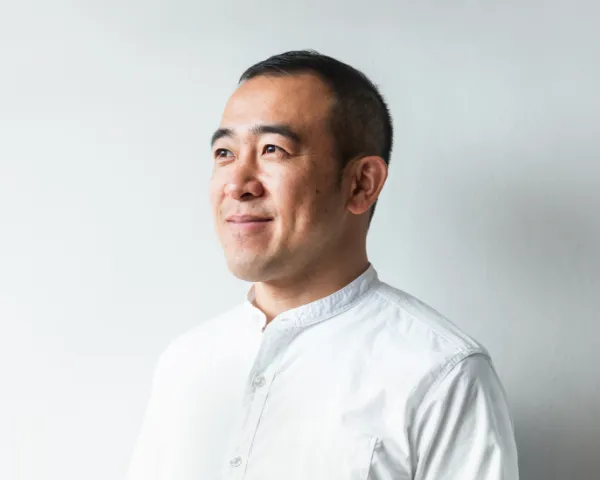
Company Profile


Media Coverage
Travel and Work | A Journey Through Japanese Architecture

Journey Through Japanese Architecture: Top Page
This media site compiles a record of 10 monthly trips (March–December) to explore wonderful architecture across Japan. It was created using the prize money from the Studio Design Award 2024 Grand Prix, inspired by the idea—also mentioned in “Travel and Work”—that #creativity_is_proportional_to_distance_traveled.
This media site was recognized as a creative initiative utilizing Studio and received the “iDID Award” at the Studio Design Award 2025.


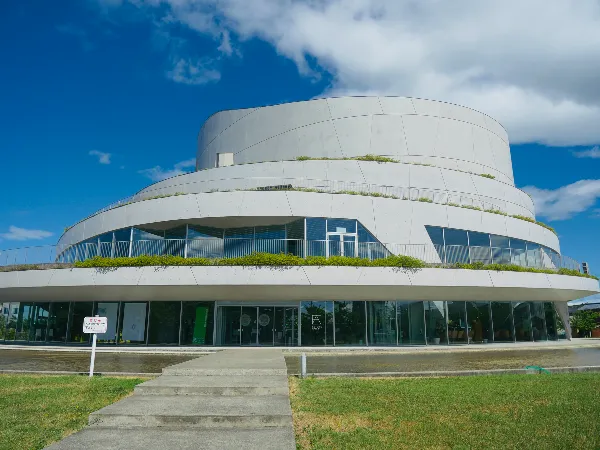


Part 10: Taiwan (Final Episode)
This time, we embarked on our first overseas trip of the journey: a "Taiwan Architecture Tour" visiting Taipei, Taichung, and Kaohsiung. We set out on a three-day journey to fully enjoy the magnificent architecture designed by Toyo Ito and Mecanoo, along with Taiwan's culinary culture.
#Studio Chat | 10 Interesting People in the Studio Scene

#Studio Chat
The "#Studio Chat" event, which served as a side project for the 2025 "Travel and Work | A Journey Through Japanese Architecture" tour, will become the main event in 2026.
The theme is “10 People of Interest in the Studio Scene.” Based on Mizoguchi’s own personal preferences and biases, we’ll be sitting down with 10 people he’s been curious about over a drink for a casual chat.
This media project explores each person from two angles: “10 Things They Love,” which reveals their personality, and “Interviews,” which shed light on their journey and way of thinking.


note Series | Weaving Connections Through Action

Moving Forward to Forge Connections
This is a serialized series on note written by our CEO, Noguchi, as the fourth installment in the "Travel and Work" brand series. Centered on three themes—"Forging Connections Through Movement," "The Museum of Failures," and "The Case for Blurring the Lines Between Work and Life"—he shares stories in down-to-earth language about the people and work opportunities he has encountered through his travels, his analysis of failed business ventures, and his practical approach to erasing the boundaries between family and work.

Vol. 1: Back in a cheap hostel in Mexico 14 years ago, I never imagined things would turn out like this
This is the story of how I met Mizoguchi at a budget hotel in Mexico City in 2012 and how we went on to launch IT+. It is a statement of my beliefs that details the reality I’ve come to understand over the past 13 years—that only one in ten startups succeeds—and the reasons why we’ve kept moving forward despite that.

Vol. 2: Forgetting Work-Life Balance: A Case for Blurring the Lines Between Work and Personal Life
This post explores my reservations about the concept of “work-life balance” and the idea that blending work and life can make 1+1 equal 3 or even 4. I describe how I put this into practice through an anecdote about a day spent with a fisherman in the Seto Inland Sea.

Vol. 3: How "The First-Glass Beer" Became Shimanami Brewery
This is the story of how a series of connections made during my trip around the world and a crowdfunding campaign for a “first-pint beer” led me to Shimanami Brewery, a craft brewery in Onomichi, Hiroshima Prefecture. I’ve written about how, through relentless effort, the dots eventually connected to form a line.

Vol. 4 (Special Edition): note—Automated Translation Is Not the "Evolution of Translation"
With the launch of note’s automatic translation feature, this post examines the development not as an “evolution of translation” but as an “evolution of distribution.” Drawing on 13 years of experience supporting small businesses—from i-mode to Shopify and generative AI—I explore the structural significance of these shifts in tools.

Vol. 5: The Museum of Failures (Part 1) – mama cookie
This is the story of a business venture to import and sell herbal cookies for breastfeeding mothers, which began with a chance encounter on the Shinkansen. I earned a certification in herbal medicine and even went so far as to source the cookies from New Zealand, but the shipment arrived by sea with mold growing on them, and that was the end of it. This is the first installment of the “Museum of Failures,” a series documenting business ventures that never took off.

Vol. 6: Museum of Failures Part 2: holoholo tokyo
This is the story of “holoholo tokyo,” a company that sold small shrimp native to Hawaii as low-maintenance decorative items. Even though the product was actually selling well, I couldn’t bring myself to commit to sourcing it when local supply became unstable, so I decided to let it go. This is the second installment of the “Museum of Failures,” where I document my decision to quit a business that was actually growing.

Vol. 7: The Museum of Failures ③ menulingual
This is the story of a web service I launched to help restaurants create multilingual menus, inspired by my experiences traveling around the world. Even though I prepared templates and a mascot, not a single restaurant ended up using it. This is the third installment of my “Museum of Failures”—a project where I was satisfied just with creating it, but lacked the serious commitment to actually sell it.

Vol. 8: Forging Connections Through Action, Part 1: Soil and Fruit
This is the story of how our family came to visit “Tsuchi to Mi,” a vineyard in Yamanashi, every year—a connection that began with a consultation about succulents. I’ve written about how these bonds are formed—bonds you can’t find behind a desk or buy with money.

Vol. 9: Museum of Failures, Part 4: LiF
In 2020, subscription services were all the rage, so I launched a business that delivered seasonal kits every month. I managed to create a website and a grand business model diagram that looked the part. But I couldn’t keep up with producing the kits every month without compromising on quality, so I shut it down after three months. The moral of the story is that “being able to do it” and “being able to keep it going” are two different things.

Vol. 10: Forging Connections Through Movement ⑨ Traveling Around Japan
In 2010, my retirement date was pushed back by a month, leaving me with 50 days of free time. It all started with the thought, “Since we have nothing to do, why don’t we drive around Japan?” So my wife and I drove about 11,000 km, sleeping in the car along the way. It wasn’t that we set out with a plan; it just happened that way as we went along.

Vol. 11: Forging Connections Through Action (10) Canada
This is the story of the five months I spent sitting side by side with adults from diverse backgrounds at a community school in Canada. When we debated the acceptance of immigrants and refugees, I had classmates right in front of me who had actually come from those places—it really made me realize that there are some things you just can’t understand unless you’ve lived there yourself.

Vol. 12: Forging Bonds Through Movement ⑪ Spain
The first stop on my trip around the world was Málaga, Spain. Invited by a mother and daughter I’d met at a community school in Canada, I stayed with them in a house overlooking the Mediterranean from the very first day. A few years later, the daughter came to stay with the Noguchi family in Japan—a story of a bond that went both ways.

Vol. 13: Forging Connections Through Action ⑫ AI and Those Who Go Out into the Field
This is the story of how our company—which doesn’t have a single engineer—used AI to launch “Succulent Navi,” a portal site for succulents, just 20 days after we started working on it. While humans wrote virtually no code, the only people who could decide what to build were the visitors themselves.

Vol. 14: Forging Bonds Through Movement ⑬ Córdoba
On the day I crashed the rental car, two police officers patched it up with black tape, then rode in the back seat to guide me along the way. The idea is that we operate on the assumption that problems will happen—but that doesn’t mean we have to handle everything on our own; rather, it means we’ll figure things out with the help of the people we meet along the way.

Vol. 15: Forging Connections Through Action ⑭ Morocco and a 70-Person House Party
After spending just one night in Marrakech—where the temperature was 48 degrees—and missing my bus by two minutes, I finally returned to Spain after six days. Just as I arrived, a house party with 70 guests was getting underway at the home where I’d been staying. As I stood there, my mind drifted back to my childhood in the Japanese countryside.

Vol. 16: Forging Bonds Through Action ⑮ Paving a Mountain Road
This summer, our family of five spent over a month traveling by car from Tokyo to Yamanashi, Nagano, Oita, and Yamaguchi. In Japan, even mountain roads where you might wonder, “How many cars pass through here in a day?” are routinely paved—comparing them to the roads I drove on in Chile and Peru 15 years ago, I write about a kind of prosperity that GDP rankings alone cannot reveal.

Vol. 17: Forging Connections Through Movement ⑯ Even as an AI, the place where I stopped remained the same
When we automated the order processing for a certain business using AI, the basic framework was up and running in just a few hours. Yet the process still stalls at the same point it did 20 years ago when we first went digital—tasks without deadlines will always lose out to those with deadlines. The point is that while AI has made the “creation” part cheaper, the rest hasn’t changed.

Vol. 18: Forging Connections Through Action ⑰ Rugby Referee Certification
This is the story of how my eldest son, a first-year middle school student, and I each earned our rugby referee certifications using our own computers. Even though I’d been in the stands cheering for years, I knew even less about the rules than my son did—the moment he said, “Wait, you didn’t know that?” I was transported back to memories of standing on the sideline in Kumagaya 30 years ago.

Vol. 19: Museum of Failures ⑤ tanicoco
This is the story of how I launched a community platform exclusively for succulent enthusiasts in 2022—only to shut it down six months later. Initial development costs totaled 1.5 million yen, and the user base never reached even a few dozen people. The root cause was that, as an entrepreneur, I failed to fully commit to the project—even before the concept itself took shape.

Vol. 20: Forging Connections Through Action ⑱ Drones and Exterior Wall Inspections
The national drone license I earned this past January wasn’t for aerial photography. Flying a drone to take pictures and completing an inspection are two different jobs. Coordinating the people involved, scheduling, and seeing the project through to the end—that’s the work I’ve been doing the longest.

Vol. 21: Forging Connections Through Action ⑲ FDE
The term “FDE” (Forward-Deployed Engineer), which we’ve been seeing a lot of lately, is only half-accurate if described simply as “an engineer who works on-site.” The key difference from being stationed at a client’s site is whether there’s a place to bring back the insights gained on-site and apply them to the company’s own products. This is yet another example of “buzzwords running ahead of reality,” just like with “thin clients” and “DX.”

Vol. 22: Forging Connections Through Action ⑳ “I Envy Your Work Style”—It Goes Both Ways
My close friends and other parents I know sometimes tell me they envy the way I work. However, I also think their jobs sound interesting, and neither of us really knows the full picture of the other’s life—this is about my current work style, which I chose because I decided to prioritize my family while my children are still young.

Vol. 23: Forging Connections Through Action ㉑ Drone Exterior Wall Inspection
Even with a 4 million yen drone, a person was still taking the photos one by one. On-site work always starts and ends with human labor—that’s what I realized after taking a two-day training course on inspecting exterior walls with drones.

Vol. 24: Forging Bonds Through Movement (11) Karate Demonstration at Ueno Toshogu Shrine
When I went to see a performance by the karate dojo my child attends at Ueno Toshogu Shrine, about 80 to 90 percent of the people around me were foreign tourists. To passersby, the children’s recital was “Japan”—it was an experience that made me think about “value.”
SDA Award
The Studio Design Award (SDA) is an award organized by Studio Inc., the operator of the no-code web development platform "Studio," to recognize outstanding websites and initiatives created using Studio.
Here, we’ll take a look at the Grand Prix winner of the 2024 Studio Design Award, subsequent projects, the 2025 award winners, and activities within the Studio community.
2025 | Winner of the iDID Award / Template Designer of the Year
The media site for "Travel and Work: A Journey Through Japanese Architecture," created as a supplementary project for the Grand Prix at the Studio Design Award 2025, won the "iDID Award," one of the corporate awards selected by sponsoring companies.
Also that year, I was named "Template Designer of the Year" in recognition of my work creating templates available on Studio Store.


2024 | Grand Prix Winner
The website "Travel and Work," created by IT+, won the Grand Prize at the Studio Design Award 2024. Below, we share some highlights from the award ceremony.


Immediately after winning the Grand Prix, interview video at Hikarie↓
Studio Ambassador
Our art director and designer, Kōta Mizoguchi, serves as an official ambassador for "Studio" and speaks at offline events organized by Studio.

Vol. 13 Tokyo (October 15, 2025)
Under the theme “Expanding the Possibilities of How Designers Work Through Studio,” I participated in a talk session with Mr. Kentaro Nakajima, an Osaka Prefecture Ambassador. We discussed the journey that led to my current work style, my track record of utilizing Studio, career planning, and the future of design skills in light of AI advancements. Approximately 70 people attended.

Vol. 19 Tokyo (April 10, 2026)
Under the theme "The Ultimate User Feature Poll!?—Exploring the Next Update Through User Challenges," we co-hosted the event with Tokyo Ambassador "Mochi." Together with Studio product managers, we discussed real-world challenges and requests from users and held a voting event for unannounced features. It was a lively event that brought together participants from a wide range of professions.
SNS
We manage X Live Space, YouTube, and Instagram.
IT Plus Chit-Chat (X Spaces (formerly Twitter), YouTube Live Streams)


[Part 2]: "How to Land Studio Projects" and "Practical Project Management"
📌 Talk Content
1. Sources of Studio Projects
2. Tools We Use
3. Studio Projects by the Numbers
4. Designing the "Trigger" That Leads to Projects
5. Acquiring Projects During the Studio's Launch Phase
6. Q&A
*You can listen to the audio from the X Live stream on YouTube below. ↓
[Part 3]: Can You Balance Travel and Work?
📌 Talk Topics
1. It All Started with a Trip Around the World
2. Family and Work-Life Balance
3. Taking Action to Forge Connections
4. Challenges and Failures
5. What Drives Me Today
6. Looking Ahead to the Next Decade
7. Q&A
*You can listen to the X Live audio on YouTube below. ↓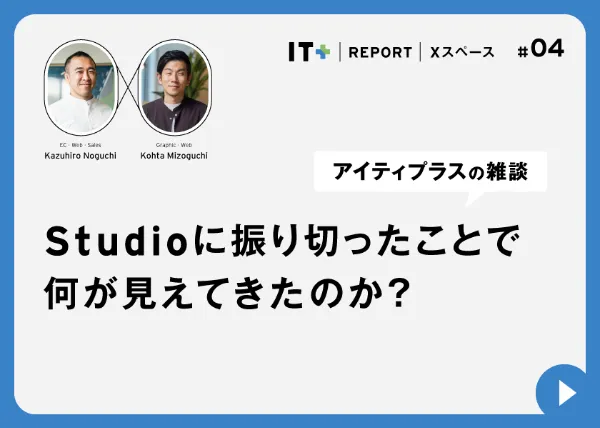
[Part 4]: What Did We Discover by Fully Committing to the Studio?
📌 Talk Content
1. The Decision to Focus Exclusively on the Studio and the Background
2. The "Results" of Focusing Exclusively on the Studio
3. Frequently Asked Questions and Sample Answers
4. Advice
5. Q&A
*You can listen to the X Live audio on YouTube below. ↓

[Part 6]: What I Learned After Visiting Every Studio Ambassador Event
📌 Discussion Topics
1. Studio Official Ambassador Program
2. Why We Visited All Venues
3. A Look Back at the Ambassador Events
4. The Osaka and Tokyo Events from a Guest’s Perspective
5. Q&A
*You can listen to the audio from the X Live stream on YouTube below. ↓
[Part 7]: Studio Design Award 2024 Grand Prize Supplementary Prize Project — What Did We Gain from the 10-Part Series “A Journey Through Japanese Architecture”?
📌 Talk Content
1. Background of the "Architectural Journey" Project
2. Criteria for Selecting Destinations and Program Structure
3. Highlights
4. Perspectives on Architecture and Their Impact on My Work
5. Does Imagination Grow Proportional to Distance Traveled?
6. Q&A
*You can listen to the X Live audio on YouTube below. ↓
PROJECT
Introduction to IT+'s In-House Projects and Participating Projects
tawawa

: A succulent specialty shop that started with a love for succulents, bringing a touch of comfort to your everyday lifeA succulent specialty store started by a family member who loves succulents. The concept of the store is "Time to enjoy yourself with succulents. The store imports seedlings from Korea and sells them under the concept of "time to enjoy yourself in harmony with succulents. We are in charge of the overall sales strategy, branding, and creative production, including the e-commerce site.
In 2024, a plastic greenhouse will be built in Koshu City, Yamanashi Prefecture, and we will start curing and selling imported seedlings. We are planning new initiatives in the future.
Shimanami Brewery

Crafted by the world’s best brewer.
Onomichi Craft BeerThe project was originally launched by Matsuoka, a brewer, Sugino, a creative director, and Noguchi and Mizoguchi of IT Plus, who worked together on the Yamanashi Brewery project. Matsuoka and Sugino are from the same hometown of Hiroshima, so they established a brewery in Onomichi. We are in charge of branding, business start-up, and website management support.
Our concept is to create a beer experience that suits the Japanese people. We pursue the ideal craft beer with a focus on the best lagers. Winner of the World Beer Awards (WBA) 2024 in Japan.

Shimanami Super Lemon Sour Wins the 2025 Good Design Award!
Shimanami Super Lemon Sour—a new sparkling sensation crafted with craft beer brewing techniques that appeals to both lemon sour and beer lovers. This marks the first time a craft beer produced by a domestic microbrewery has won the Good Design Award (*1).
※1
The Award Gallery ( https://www.g-mark.org/gallery/winners ), search for "craft beer" or "beer" (according to Shimanami Brewery).
KUSUMUSUBI

Rice Shop Musubu.
Kusu’s Delicious Salted Rice BallsThis project was launched in Argentina during a round-the-world trip, in collaboration with Yu Eto, the third-generation owner of “Iseya Denroku,” a rice shop in Kusu, Oita. Established in 1953, this is the only rice shop in Kusu Town, and to promote Kusu rice, they chose the ultimate simplicity: salted rice balls.The rice, grown with pride by the farmers, is carefully selected, washed, soaked, cooked, and shaped into rice balls by the rice shop. The essence of Kusu’s climate is captured in every single grain. The shop opened on June 27, 2026, inside the Iseya Denroku store, offering takeout only.
We are responsible for everything from the overall business strategy to branding and various creative productions.